

There is a language older than any spoken word. It predates Sanskrit, predates the cave paintings at Lascaux, predates the first grunt uttered by the first throat that had the architecture to make sound. It is the language your body speaks to itself every second of every day, and it is written in amino acids.
You have almost certainly heard the word peptide. It has become, in recent years, the darling of the wellness world. Whispered in dermatology offices, splashed across supplement labels, injected in concierge medicine clinics from Scottsdale to South Beach. Peptides for skin. Peptides for sleep. Peptides for gut health, for muscle recovery, for libido, for that ineffable thing people now call "optimization." The peptide market is a multibillion-dollar cathedral, and the congregation is growing.
But here is what almost nobody is telling you.
A peptide is a word. Just a word. One word. And a word, no matter how beautiful or precise, is limited by its own definition. It can only say one thing.
An amino acid is a letter in an alphabet.
And if you have every letter in the alphabet, you can write anything. And everything. Words, sentences, phrases, paragraphs, books. Not just one word.
The Alphabet You Were Born With
The distance between a letter and a word, between an amino acid and a peptide, is the distance between possibility and limitation. And most people, including many of the scientists and clinicians selling you peptides, have either forgotten this distinction or never understood it in the first place.
Your body runs on proteins. This much you know. Proteins build your muscles, catalyze your digestion, ferry oxygen through your blood, and fire the electrical impulses that let you read this sentence. What you may not know is how proteins are made. The answer is stunning in its simplicity.
Every protein in the human body is assembled from just twenty amino acids.
Twenty. That's the whole kit. The full set. Twenty molecular building blocks arranged in different sequences to produce every structural, enzymatic, hormonal, and immunological protein your body requires to stay alive. Your collagen. Your hemoglobin. Your insulin. The antibodies hunting pathogens in your bloodstream right now. All of them, every single one, are sentences written from the same twenty-letter alphabet.
A peptide is what happens when a few of those letters are strung together into a short chain. Typically between two and fifty amino acids in length. A peptide is a small word, sometimes a very useful one, but a word nonetheless. It performs a specific function. It binds to a specific receptor. It triggers a specific cascade. And then it is done. That is the whole of what it can say.
Here is the number that should change how you think about your body: from those twenty amino acids, your cells can assemble roughly 1.5 million different peptides.
One point five million words. All from twenty letters.
The Intelligence Behind the Ink
Picture your body as a vast and ancient library. Not the hushed, marble kind. The living kind. Shelves shifting. Pages rewriting themselves. Librarians sprinting down corridors with urgent requests.
This library has a scanning system. Constant, tireless, astonishingly precise. Every moment, your cells are surveying their own terrain, reading the internal landscape for damage, deficiency, disruption. A muscle fiber torn during yesterday's run. A dip in neurotransmitter production from last week's insomnia. An inflammatory response gaining momentum in the lining of your gut. The scanning never stops. It is one of the most elegant surveillance systems in the known universe, and it has been running since the day you were conceived.
But the scan is only half the operation. Detection without response is just observation. What makes the system extraordinary is what happens next.
When your body identifies a need, a specific deficiency, a specific repair job, a specific recalibration, it doesn't place an order with a pharmaceutical company. It doesn't schedule an appointment. It goes to work. It reaches into its reserves of amino acids and begins to assemble, with breathtaking specificity, the exact peptide required for the job at hand. The right letters, in the right order, to spell the right word.
This is not magic. This is molecular biology.
Your cells are composing language in real time. And the vocabulary available to them, the complexity and range of what they can say, what they can build, what they can repair, depends entirely on whether they have access to all twenty letters.
What Happens When the Alphabet Is Incomplete
Now imagine that library again. The scanning system is working. The librarians know exactly which book needs to be written. But someone has removed several letters from the typewriter giving the library its operating commands.
No K. No W. No J. No Q.
The intelligence is intact. The diagnostic precision is still there. Your body knows what it needs. But it cannot build it. It can sense the deficiency but cannot assemble the response. Like a writer who can see the sentence in her mind but is missing the keys to type it.
This is what happens when you buy a single peptide.
You are handing your body one word. Maybe a good word. Maybe even the right word for one particular problem. But it is still just one word. And the moment a different problem arises, a problem that requires a different peptide, a different sequence of amino acids, that single word falls silent.
When you take all twenty amino acids together, you are not giving your body a word. You are giving it the entire dictionary. Every letter. Every possible combination. Every peptide your system could ever need to spell.
You are not telling your body what to fix. You are Bio Allowing. You are giving it the freedom to decide for itself. To scan, to identify, to assemble, to respond with the full linguistic range that 1.5 million peptide possibilities provides. This is the difference between a prescription and a permission.
The Universal Alphabet
Here is something worth sitting with: every living organism on this planet from the bacteria in a thermal vent two miles beneath the Pacific to the sequoia pulling water four hundred feet into the sky is built from the same twenty amino acids.
Every one.
The monarch butterfly migrating three thousand miles on wings thinner than paper. The octopus rewriting its own RNA. The tardigrade surviving the vacuum of space. The human infant assembling a brain capable of language, music, mathematics, and longing. All of them are running on the same alphabet. The same twenty letters, arranged in different sequences, building different sentences for different species, but drawn from the same universal set.
This is not coincidence. It is one of the deepest facts in biology. Life, at its most fundamental, is a shared language. And amino acids are its alphabet.
The scientific community occasionally identifies amino acids beyond the twenty like selenocysteine, pyrrolysine, but these are not new letters. They are ligatures. Combinations or modifications of the originals. The core alphabet remains what it has been for roughly four billion years. Twenty. Fixed. Non-negotiable.
Your body needs all of them. Not some. Not a curated selection. All twenty.
The Supply Problem
So where do you get them?
The conventional answer is diet. And diet does provide amino acids. Some of them, some of the time, in some quantities. But no single diet, no matter how meticulously planned, delivers all twenty amino acids in the amounts your body requires for optimal function. Not carnivore. Not vegan. Not Mediterranean. Not the high-protein regimen your trainer swears by.
This is not a failure of willpower or knowledge. It is a failure of supply.
Your body can synthesize some amino acids on its own. Eleven of them, in fact. The ones nutritional science has labeled "non-essential," a term that is technically accurate and profoundly misleading. They are called non-essential not because you don't need them, but because, in theory, your body can produce them without dietary input. The remaining nine, the "essential" amino acids, must come from food.
But here is where the ground shifts beneath the conventional story.
The body's ability to produce those eleven "non-essential" amino acids depends on raw materials. On cofactors. On enzymatic pathways that are themselves dependent on adequate nutrition. And adequate nutrition depends on the nutrient density of your food. Which depends on the health of the soil it grew in. Which depends on the water that fed the soil. Which depends on the air that carried the rain.
You see where this goes.
Decades of industrial agriculture have stripped topsoil of minerals. Aquifers carry residues that were never supposed to be there. The apple you eat today contains measurably fewer nutrients than the apple your grandmother ate in 1950. This is not alarmist rhetoric. It is published data. USDA data. The decline is documented and ongoing.
Which means even the amino acids your body is supposed to manufacture on its own are being produced in lower and lower quantities. The factory is still running, but the supply chain is failing. The letters are fading.
The Problem Nobody Could Solve
If the answer seems obvious, just put all twenty amino acids in one supplement and sell it, you might wonder why no one has done it before.
The reason is chemistry. Stubborn, unforgiving, spectacular chemistry.
Amino acids carry electrical charges. Some are positive. Some are negative. Some are neutral. And when you place them in proximity, they behave like magnets with opinions. Certain amino acids attract each other. They pull close, bind, clump, fall out of solution. Others repel, pushing apart with a force that no amount of stirring or reformulating can overcome. Still others react, transforming into something other than what you intended.
Getting all twenty amino acids into a single stable formulation is not a branding challenge. It is a physics problem. A mathematical puzzle of charge balancing and molecular choreography that has defeated some of the best supplement scientists in the world for decades.
This is the unspoken reason behind the supplement industry's vocabulary. "Essential" amino acids. "Branched-chain" amino acids. "Core" amino acids. These categories are not scientific discoveries. They are workarounds. Marketing language designed to frame limitation as intention. The industry couldn't get all twenty to coexist in one formula, so it sold you nine and called them "essential." It sold you three and called them "branched-chain." It created categories that sound like science but function as concessions.
You were never getting the full alphabet. You were getting the letters they could manage to keep in the same bottle.
LIFE: Every Letter. One Scoop.
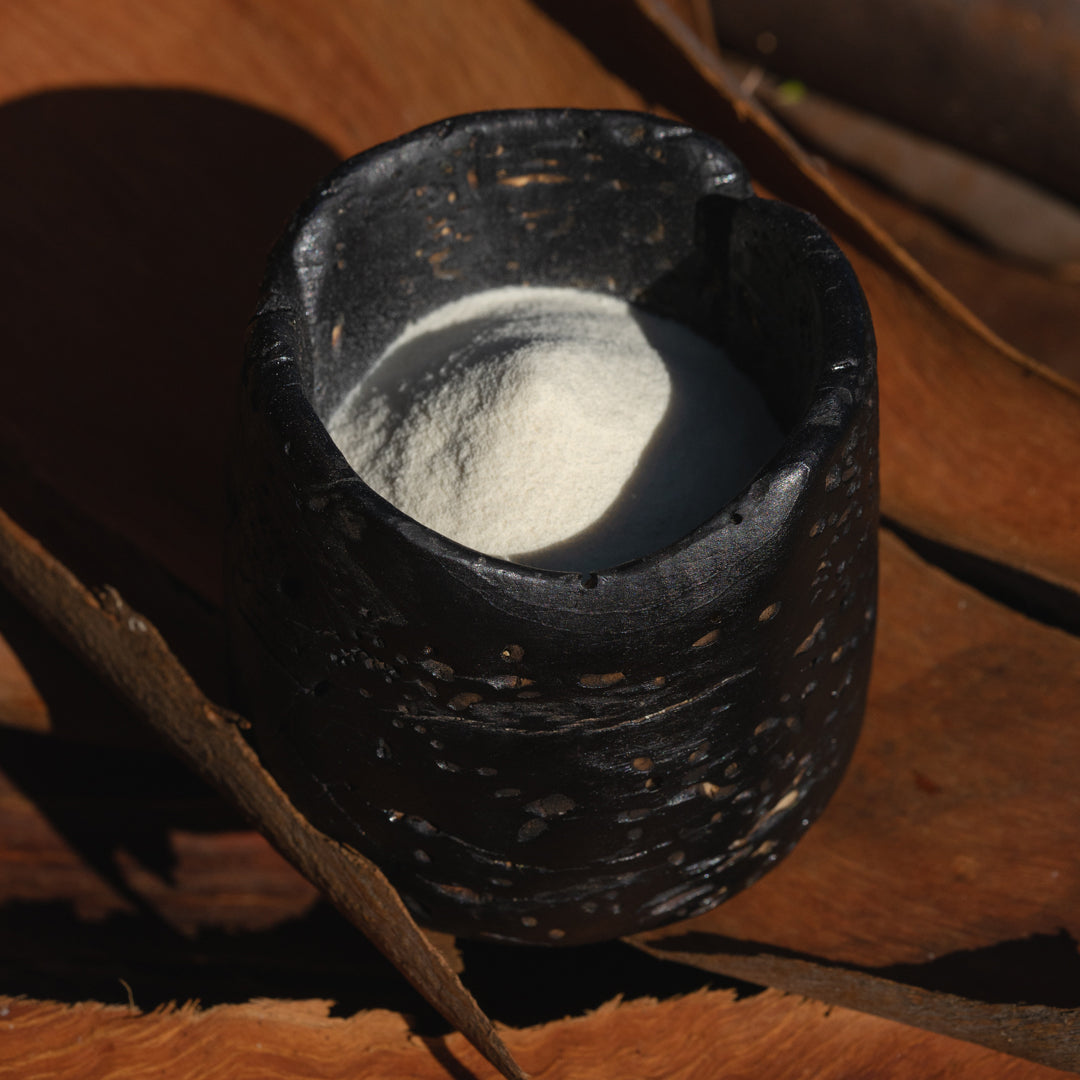
LIFE Time Alchemy is a tasteless, odorless daily supplement powder that contains all twenty amino acids in a single, stable formulation.
That sentence is simple. What it represents is not.
It means that the charge-balancing problem, positive against negative, attraction against repulsion, the mathematical puzzle that stalled an entire industry has been solved. By kaü. Every amino acid is present. Every charge is accounted for. Every letter of the protein alphabet is available in one product, in one daily serving, without needles, without prescriptions, without the clinical overhead that has made peptide therapy the province of the privileged.
It means you are not choosing a word. You are not guessing which peptide your body might need today, this week, this year. You are providing the raw material and stepping back. Letting the most sophisticated biological intelligence on the planet, your own body, do what it has been trying to do all along.
Scan. Identify. Assemble. Repair.
With all twenty letters, your body can spell any word it needs. All 1.5 million of them. It can compose the peptides for tissue repair after a surgery and the peptides for serotonin synthesis after a sleepless night. It can build the sequences for immune modulation and the sequences for collagen regeneration and the sequences for hormonal recalibration simultaneously, dynamically, in real time, calibrated to your specific biology at this specific moment.
No single peptide can do that. No curated subset of amino acids can do that. Only the full alphabet.
The Sentence Your Body Has Been Trying to Write
We have spent a century learning to speak to the body. Pharmaceuticals. Targeted therapies. Isolated compounds designed to override, suppress, stimulate, replace. And much of that work has been extraordinary. Life-saving. World-changing.
But there is another approach. Older and, in some ways, more radical.
You can let the body speak for itself.
Not by guessing what it needs. Not by selecting one peptide from a catalog and hoping you chose correctly. But by giving it every letter in its native language and trusting the four-billion-year-old intelligence that has been assembling proteins since the first single-celled organism figured out how to replicate in the primordial dark. Bio Allowing your system to work the way Nature always intended.
That's what a full amino acid profile does. It doesn't instruct. It allows. It doesn't prescribe a single word. It provides the whole language.
LIFE is not a peptide. It is every peptide waiting to be written.
Your body already knows the sentences. It just needs the letters.
All twenty of them.