

Here is something no one has told you, though the evidence has been accumulating for decades in journals you were never expected to read.
That thickness around your midsection. The puffiness in your face when you wake up. The pants that fit last spring and do not fit now despite the fact that you have changed nothing, not your diet, not your exercise, not the number of hours you spend on your feet. The skin that looks tired and porous no matter what you put on it. The jawline that has softened. The nose that seems, somehow, wider than it used to be.
You have looked at these changes in the mirror and concluded something about yourself. Something unkind. Something that probably involves the word fat.
You are almost certainly wrong.
What you are looking at is not fat. What you are looking at is inflammation.
The Fire Inside
Inflammation is not a disease. It is the body's first and oldest response to threat. Cut your finger and the tissue swells, reddens, heats. That is acute inflammation: localized, purposeful, temporary. It is your immune system doing exactly what it was designed to do. Arrive. Contain. Repair. Leave.
The problem begins when inflammation does not leave.
Chronic low-grade inflammation, the kind that hums beneath the surface for months, years, decades, is something else entirely. It is not a response to a single wound. It is a persistent state of biological alarm. The immune system mobilized and unable to stand down. Inflammatory cytokines circulating in the blood at levels too low to produce obvious symptoms but high enough to quietly damage everything they touch.
This is not fringe science. This is the mainstream medical consensus of the last twenty years. Echoing what ancient medicine traditions passed down. Chronic inflammation is now understood to be a root driver, not a symptom, a driver, of cardiovascular disease, type 2 diabetes, Alzheimer's, certain cancers, autoimmune disorders, and metabolic syndrome. The research linking sustained inflammatory markers to the onset of major disease is so extensive and so consistent that some researchers have begun referring to the phenomenon as "inflammaging," the intersection of chronic inflammation and biological decline.
But here is what the medical literature knows and the mirror cannot tell you: inflammation doesn't just cause disease. It changes how you look.
What Inflammation Does to Your Body (That You Can See)
Chronic inflammation causes your tissues to retain fluid. Not in the dramatic, clinical way that sends people to the emergency room. In the quiet, accumulative way that adds two inches to your waist and makes your rings tight by afternoon. The fluid is interstitial, trapped between cells, puffing up tissue from the inside. It is not fat. It does not respond to caloric restriction. It does not care how many steps you took this week.
This is why so many people exercise faithfully and eat carefully and still cannot understand why their body refuses to change. They are fighting the wrong enemy. They are trying to burn something that is not fuel. They are trying to metabolize water and immune response, and it does not work, and they blame themselves.
Inflammation reshapes your face. Fluid retention in the soft tissues around the eyes and cheeks and jaw creates puffiness that reads, in the mirror, as weight gain or aging. The nose appears wider because the surrounding tissue is swollen. The pores appear larger and deeper, that orange-peel texture that no serum seems to smooth, because inflamed skin produces excess sebum and loses the structural tightness that keeps pores small and flush with the surface.
This is the face that sends people to dermatologists. To cosmetic counters. To the websites of plastic surgeons, scrolling through before-and-afters at midnight, wondering what procedure might give them back the face they used to have. A face that, in many cases, is not gone. It is buried under inflammation. And no scalpel, no filler, no retinol cream can address what is happening beneath the skin if the fire beneath the skin is still burning.
Inflammation is the reason you are three pant sizes larger than your frame suggests you should be. It is the reason your skin looks dull and textured despite a twelve-step skincare routine. It is the reason your body feels heavy and sluggish in ways that have nothing to do with the number on the scale. The weight is real. But much of it is not fat. It is the visible, tangible, measurable consequence of a body stuck in a low-grade immune response it cannot resolve.
The Oldest Medicine in the World
Modern medicine excels at naming things. Inflammation. Cytokines. C-reactive protein. Interleukin-6. We have mapped the molecular cascade with extraordinary precision. We understand the pathways, the biomarkers, the downstream consequences.
What we are less good at, what we have, in fact, largely abandoned, is the practical, daily, lived wisdom of how to prevent the fire from starting.
This is where it is worth listening to the traditions that have been doing this work for thousands of years. Not alternative medicine. Original medicine.
Ayurvedic medicine, which has been practiced on the Indian subcontinent for over three millennia. Traditional Chinese Medicine, with a continuous clinical lineage spanning more than two thousand years. Nordic folk medicine, the tradition from which kaü draws its heritage, rooted in the practices of Northern European healers who understood the relationship between cold climates, warm nourishment, and the body's inflammatory response centuries before anyone had a word for cytokines.
These traditions disagree on many things. They use different languages, different frameworks, different metaphors for what is happening inside the body. But on the subject of inflammation, or what they would call heat, or stagnation, or imbalance, they converge on a set of principles so consistent across cultures and centuries that dismissing them requires more effort than listening to them.
Three things. They all come back to three things.
Sleep. Warmth. And the rhythm of eating.
Sleep Is Not a Suggestion. It Is a Dose.
Every ancient medical tradition treats sleep as medicine. Not as a lifestyle recommendation. Not as a wellness goal to be optimized between work emails and late-night streaming binges. As medicine. Dosed with the same precision that a modern physician uses to prescribe milligrams and timing.
Ayurveda specifies when to sleep and when to rise based on the body's circadian rhythms. Traditional Chinese Medicine maps sleep cycles to organ function, teaching that specific hours of rest correspond to the repair of specific systems. Nordic healing traditions understood that the long dark winters were not an inconvenience but a biological instruction; the body asking for more rest, more repair, more time in the state where healing actually occurs.
We hear constantly that sleep should be a priority. But the word priority still implies a choice. It suggests that sleep is one important thing among many, competing with productivity and socializing and the next episode and the inbox. The ancient traditions did not frame it this way. They understood something that modern endocrinology has since confirmed.
When you are awake, you are producing stress hormones. Cortisol. Adrenaline. Norepinephrine. This is not pathological. It is the cost of consciousness. The body in its waking state is in a mild but measurable state of alert. And when that alert state is sustained, when you sleep six hours instead of eight, five instead of six, when the stress of the day bleeds into the night and the night fails to provide a sufficient neurochemical reset, the cortisol does not clear.
Sustained elevated cortisol does something very specific to the body. It signals fat storage. Not subcutaneous fat, the relatively benign kind that sits beneath the skin. Visceral fat. The deep, metabolically active fat that wraps around organs, produces its own inflammatory cytokines, and drives the very cycle of chronic inflammation we are talking about. Stress hormones build visceral fat. Visceral fat produces inflammation. Inflammation disrupts sleep. Poor sleep elevates stress hormones. The cycle tightens.
Sleep is where you break it.
Sleep is where cortisol drops, where growth hormone rises, where the immune system shifts from its daytime offensive posture to its nighttime repair mode. Every hour of deep sleep is an hour your body spends resolving inflammation rather than producing it.
The ancient traditions knew how to prepare the body for this. Their methods are not complicated. They are warm.
A warm bath before bed. A warm cup of herbal tea: chamomile, valerian, tulsi. A warm compress or heating pad laid across the stomach for twenty minutes. Warmth signals the parasympathetic nervous system. It tells the body that the day is ending, that the alert state can soften, that it is safe to descend into the kind of sleep where repair happens.
And then, a cold room for sleep. The contrast matters. A warm body entering a cool environment drops its core temperature faster, which is the physiological trigger for deep sleep onset. This is not folk wisdom dressed up in modern language. This is published sleep science arriving, several thousand years late, at the same conclusion the old traditions reached by observation.
Begin and End with Warmth
If sleep is the dose, warmth is the delivery system.
Every one of these traditions, Ayurvedic, Chinese, Nordic, insists on warm liquids to begin and end the day. Not as a comfort. Not as a preference. As medicine. Warm broth upon waking. Warm herbal tea. Warm water with citrus squeezed in. The specific beverage varies by culture. The principle does not.
Here is why it works. Your digestive tract is a muscular tube lined with smooth muscle and nerve endings that respond to temperature. When you wake up and pour ice water into an empty stomach, or eat a cold breakfast, or drink a refrigerated protein shake, the smooth muscle contracts. It braces. This is not a metaphor. The tissue physically tightens in response to cold, the same way your hand pulls back from a cold surface. Digestion slows. Motility decreases. The system that is supposed to be waking up and moving things through clenches instead.
Warmth does the opposite. A warm liquid relaxes the smooth muscle of the intestinal wall. It opens the system. It improves peristalsis, the rhythmic wave-like contractions that move food and waste through the digestive tract. This is why cultures that begin the day with warm broth or tea report fewer digestive complaints. Not because the broth contains a magical compound, but because the warmth itself is a physiological signal. It tells the gut to open. To move. To process.
When digestion is efficient, food passes through in a reasonable timeframe. Nutrients are absorbed. Waste is eliminated. When digestion is sluggish, when the system is chronically braced, chronically cold, chronically jarred by temperature shock and difficult-to-process foods, material sits. For days. Sometimes weeks. And stagnant material in the gut produces its own inflammatory cascade. Bacterial overgrowth. Gas. Bloating. Endotoxins leaking through an intestinal lining that was never designed to hold waste for that long.
This is the origin of the bloating that so many people attribute to "getting older" or "being fat." It is neither. It is a digestive system in a sustained state of low-grade stress, producing inflammation with every meal it cannot efficiently clear.
The ancient wisdom is unanimous: the largest meal of the day should be lunch. Not breakfast, which loads the system heavily before it has fully awakened. Not dinner, which forces the digestive organs to work through the night when the body should be in repair mode. Lunch. The middle of the day, when digestive fire as Ayurveda calls it, or digestive qi as Chinese Medicine frames it, is at its peak.
End the day lightly. Let the gut rest. Let the body redirect its energy from processing food to processing damage. This is not deprivation. It is timing. And the difference it makes in how you feel and how you look is, for most people, visible within weeks.
The Things That Feed the Fire
There are substances the body processes easily and substances it does not. This is not a moral judgment. It is biochemistry.
Dairy is difficult for the adult human digestive system. Full stop. The enzyme lactase, which breaks down lactose, declines sharply after early childhood in the majority of the global population. Even in populations with higher lactase persistence, the casein proteins in dairy are inflammatory for many adults, triggering immune responses that manifest as acne, bloating, sinus congestion, and intestinal discomfort. You may love cheese. Your gut almost certainly struggles with it. And the struggle shows up on your skin and around your waistline in ways you have probably attributed to something else entirely.
Alcohol is an inflammatory agent. It is metabolized in the liver into acetaldehyde, a toxic compound that triggers an immune response. It disrupts the gut lining, increasing intestinal permeability, the condition commonly called leaky gut, which allows endotoxins to enter the bloodstream and provoke systemic inflammation. It dehydrates tissue, which makes the skin thinner, drier, and less elastic, causing fine lines and wrinkles to appear deeper and more prominent. The puffiness you see the morning after drinking is not just dehydration. It is acute inflammation. And if you drink regularly, that acute response becomes chronic. This does not mean you must eliminate alcohol entirely. It means understanding that every glass is a small inflammatory event, and spacing those events further apart gives the body time to clear the fire.
Sugar may be the most consequential inflammatory trigger in the modern diet. Added sugars, and excessive natural sugars from fruit juice, dried fruit, and high-glycemic foods, provoke a rapid insulin response that cascades into increased production of pro-inflammatory cytokines. But sugar does something else that is worth understanding if you care about how your skin looks and ages.
Sugar damages collagen through a process called glycation. Glucose and fructose molecules bond to the collagen and elastin proteins in your skin, forming compounds called advanced glycation end products or AGEs, in one of science's more pointed acronyms. AGEs make collagen stiff and brittle. They impair the skin's ability to repair and regenerate. The result is visible: skin that sags earlier, wrinkles that deepen faster, a loss of the plump, resilient texture that characterizes healthy, well-maintained tissue. The more sugar you consume, the more AGEs you produce, and the more you will see it in the mirror. This is not vanity. It is protein chemistry.
You do not have to live like a monk. But reducing added sugar, moderating alcohol, and being honest with yourself about dairy will quietly, steadily, measurably reduce the chronic inflammatory load your body is carrying. And when that load lightens, you will see the change in your face, your waistline, your skin, and your energy before you see it on a blood panel.
Give the Body What It Needs to Finish the Job
Sleep more. Start your morning with warmth. End your evening with warmth. Eat your biggest meal in the middle of the day. Reduce the substances that feed the fire.
These are ancient instructions. They cost nothing. And they work.
But the body's ability to resolve inflammation, to actually dismantle the immune cascade and repair the tissue damage it has caused, depends on having the raw materials to do so. Anti-inflammatory peptides. Tissue-repair proteins. Enzymatic compounds that regulate the immune response. All of which are assembled from amino acids.
This is where a simple addition to your morning or evening ritual can make a meaningful difference.
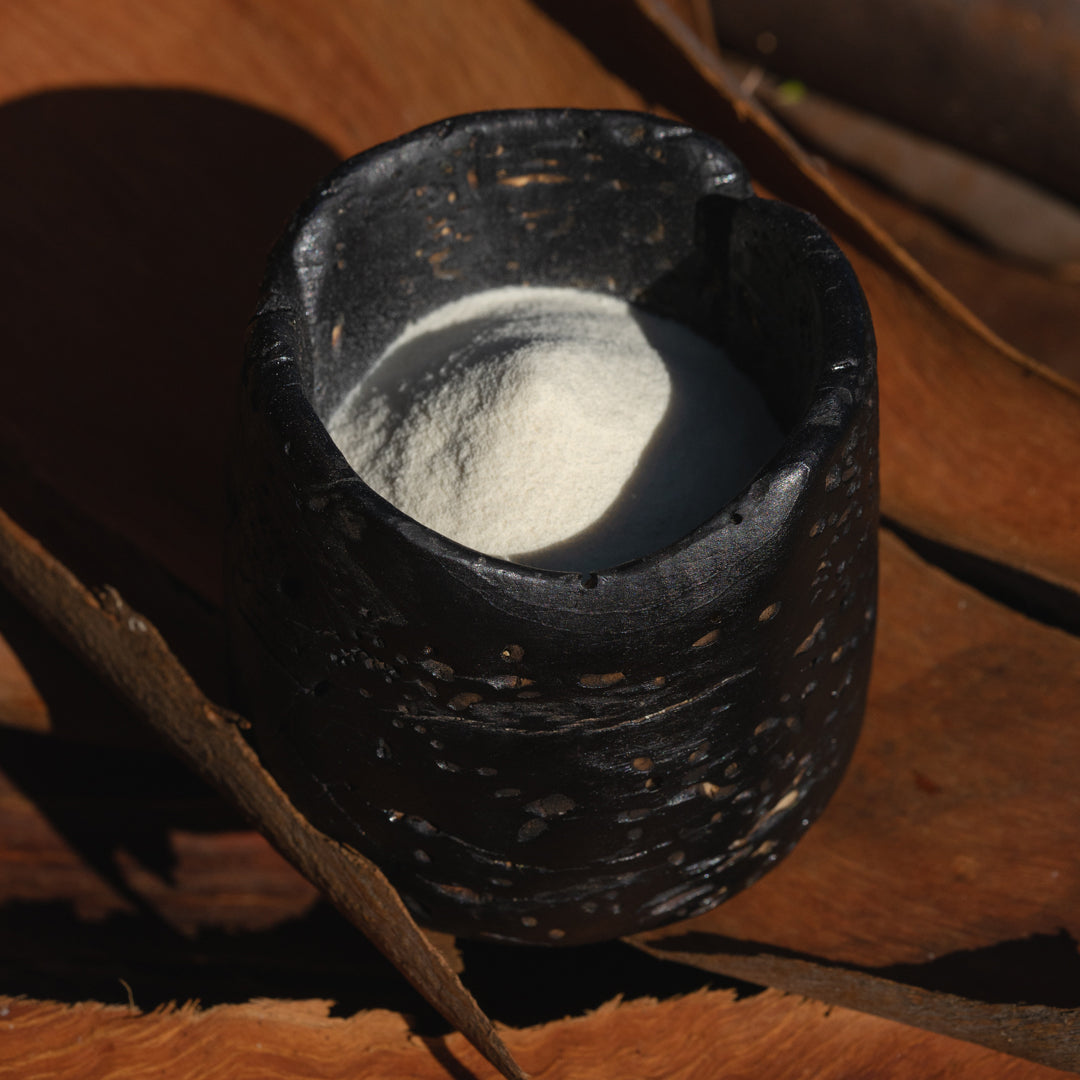
LIFE Time Alchemy by kaü, is a tasteless and odorless powder that dissolves completely into any warm beverage, your morning broth, your evening tea, your warm water with lemon. It contains all twenty amino acids the human body requires: the full protein alphabet from which your cells may assemble every peptide they need to function, including the peptides responsible for modulating and resolving inflammation.
You are not giving your body a single anti-inflammatory compound and hoping it matches the problem. You are giving it every letter it needs to spell every anti-inflammatory word in its vocabulary and trusting the oldest intelligence on the planet to decide which ones to write.
Sleep. Warmth. Rhythm. And the raw materials to support your body doing what four billion years of evolution designed it to do.
You are not fat. You are inflamed. And now you know what to do about it.